Is Zambezi White-Water Rafting Safe? What to Expect
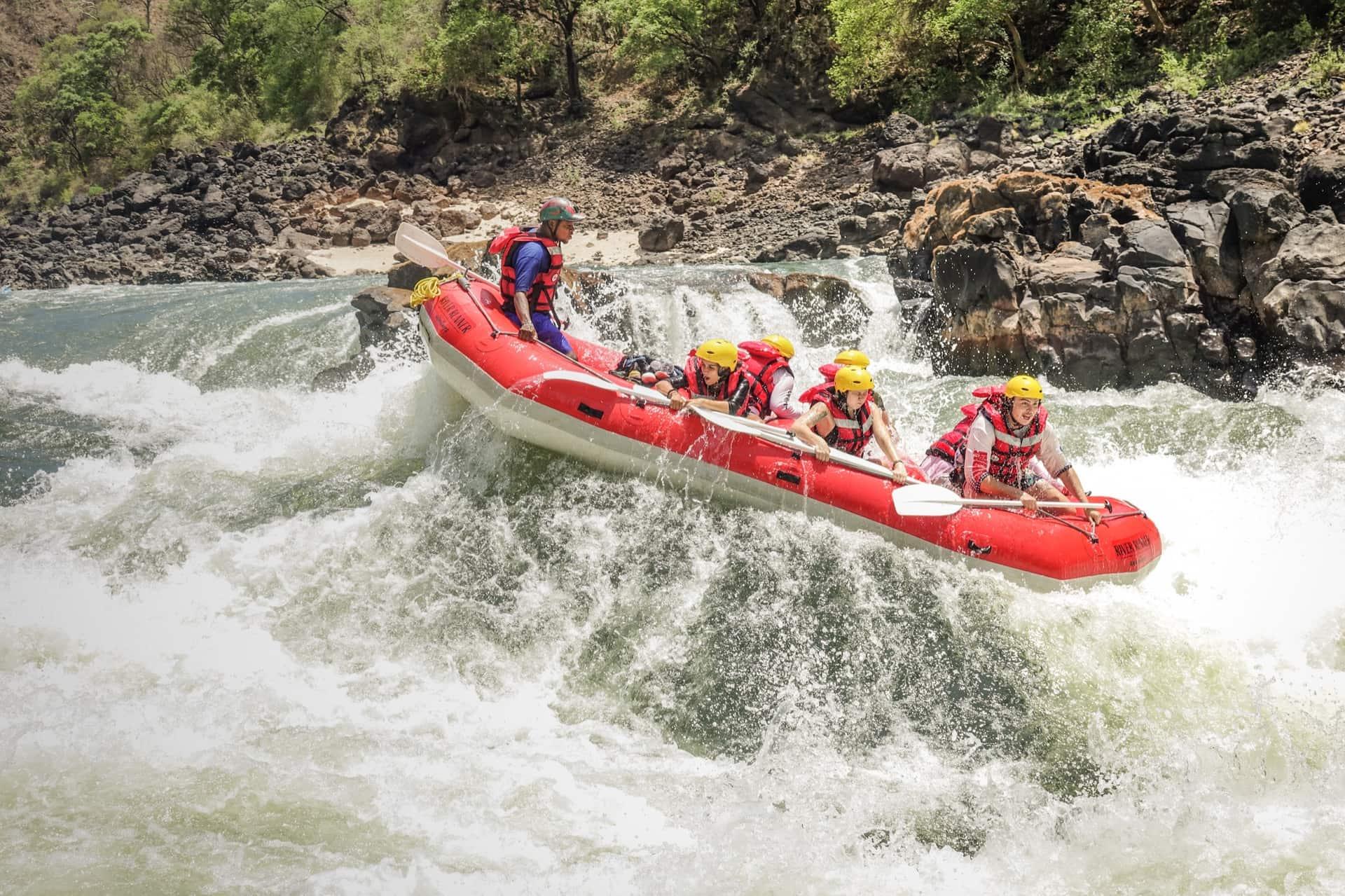
Zambezi rafting is genuinely adventurous — the rapids are Grade III to V — but it is run safely every day for first-timers by professional local guides supported by safety kayakers. You wear a helmet and life jacket throughout, get a full briefing, and the biggest rapids are scouted before you run them. The minimum age is 13 and moderate fitness is recommended. Flips do happen and are part of the experience; the warm, deep water and the safety crew are what make them manageable.
White-water rafting is an adventure sport, and the Zambezi is big water — so the honest answer is that it carries real risk, managed to a high standard. Here is exactly how that management works.
How safety is managed on every trip
- Safety kayakers shadow every rafting trip through the rapids, ready to reach a swimmer in seconds.
- A full safety briefing before you launch covers paddle commands, what to do if you fall out, and how to swim a rapid.
- Helmets, life jackets and paddles are provided and worn the whole time on the water.
- Guides scout and brief the bigger rapids before running them, and pick lines to match the day's water level and your group.
The real risks, honestly
Rafts do flip and people do swim rapids — that is normal on the Zambezi and, with the safety crew and warm deep water, usually ends in adrenaline and laughter. The genuine considerations are bumps and scrapes, the physical effort of a big day, and the steep climb out of the gorge at the end of longer trips. People with heart, back or serious health conditions, and anyone pregnant, should not raft.
Who can go
| Requirement | Detail |
|---|---|
| Minimum age | 13 years, in line with Zambezi safety guidance |
| Swimming | You need not be a strong swimmer, but should be comfortable in water |
| Fitness | Moderate for half-day trips; good for full-day and 2-day trips (plus the climb out) |
| Not suitable if | Pregnant, or with heart/back or other serious medical conditions |
The single most important safety factor is your guides. Local Zambezi guides who grew up on this water read the river better than anyone — which is exactly why community-owned, locally-guided trips are worth seeking out.
Frequently asked
Has anyone been hurt rafting the Zambezi?+
As with any adventure sport there is real risk, but serious incidents are rare relative to the huge number of trips run safely each year. Professional guides, compulsory life jackets and helmets, and dedicated safety kayakers on every trip are what keep it that way.
What happens if the raft flips?+
Flips are a normal part of Zambezi rafting. You are briefed beforehand on exactly what to do. The water is warm and deep, your life jacket keeps you up, and safety kayakers are positioned to reach you quickly and get you to the raft or shore.
Do I need to be able to swim?+
You do not need to be a strong swimmer, but you should be comfortable in water. You wear a life jacket the entire time on the river and the safety team is always close by.
Ready to raft the Zambezi?
Book a community-owned, locally-guided trip through the Batoka Gorge — transparent pricing, instant online booking, pickup and return from your Livingstone lodge included.
Keep reading
- White-Water Rafting the Zambezi: The Complete GuideEverything you need to raft the Zambezi below Victoria Falls: trips, prices, grades, best season, safety and how to book — from a community-owned Livingstone operator.
- Best Time to Raft the Zambezi — Season by SeasonThe best time to raft the Zambezi is the low-water season, roughly August to December, when the full run of up to 25 rapids is open. Here's the month-by-month water-level guide.
- Rafting from Livingstone (Zambia) vs Victoria Falls (Zimbabwe)Livingstone and Victoria Falls town raft the same Zambezi gorge — the difference is which side you stay on. Here's how to choose, plus the KAZA UniVisa and border basics.